Home About Keynotes Register Now
Keynote Speakers

Distinguished Voices
in Arabic Linguistics

Four leading scholars addressing ASAL 39 across three days

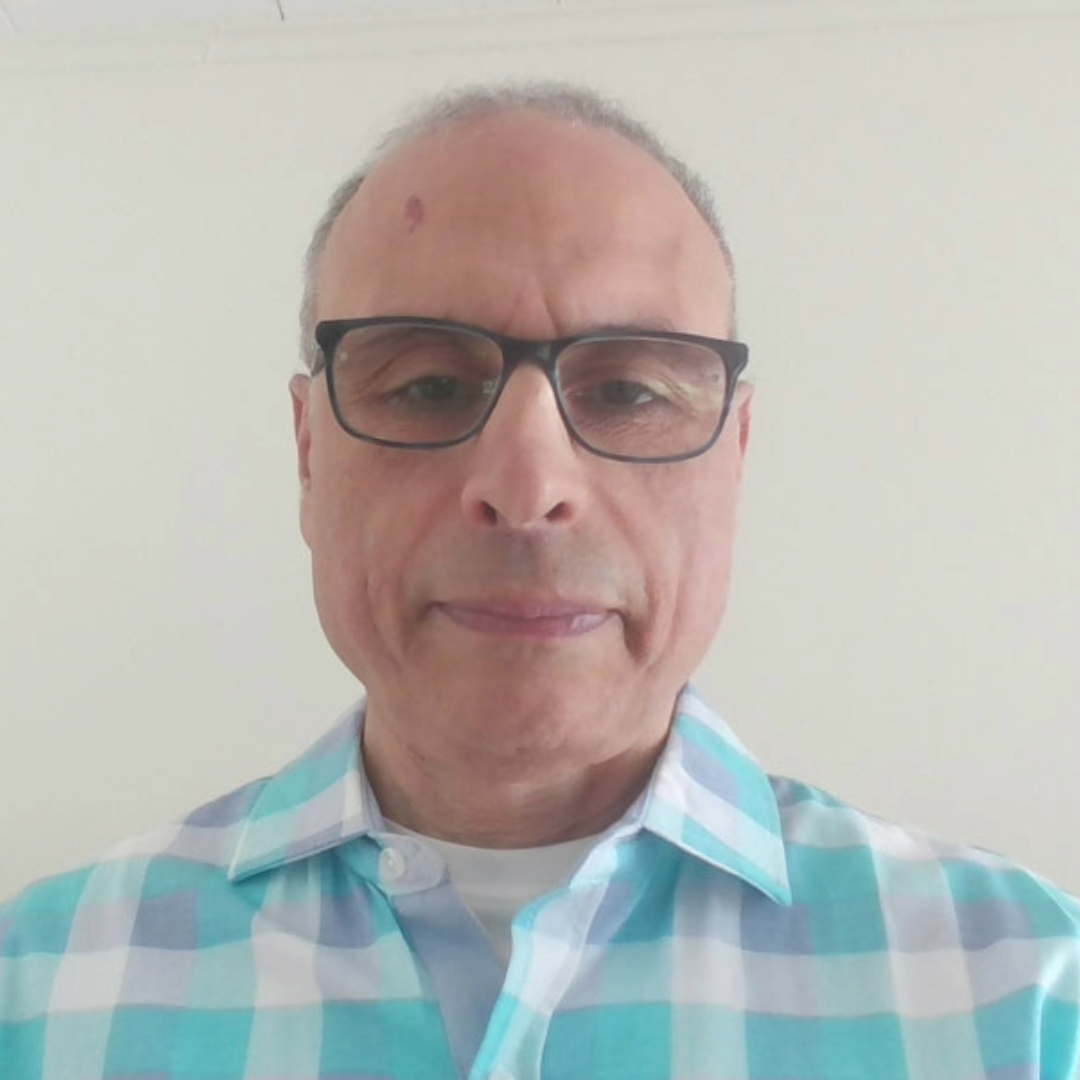
Muhammad Abdul-Mageed Friday, Mar 27 · 4:50 PM
Keynote

Muhammad Abdul-Mageed

The University of British Columbia, Canada

Talk Title

Measuring Arabic Competence in Modern Models: Variation, Cultural Meaning, and Contextual Appropriateness Across Varieties

Arabic is best understood not as a single language target but as a structured space of variation across geolects, registers, genres, and culturally anchored meaning. This keynote argues that Arabic linguistics and Arabic NLP share a methodological bottleneck: we discuss “competence” while relying on resources and evaluations that often under-specify what they measure. This has become more visible with the rise of large language models, whose fluent outputs can mask systematic gaps in dialectal control, cultural inference, and context-appropriate choice. I propose treating corpora, tasks, and benchmarks as measurement instruments designed to make variation variables explicit, controllable, and comparable, so computational results can speak to linguistic hypotheses and linguistic theory can constrain computational claims. I present a unified program around three increasingly stringent notions of Arabic competence. (i) Variation competence: recognizing and preserving dialectal signals under controls that reduce spurious correlates such as topic, named entities, and geography-as-content. (ii) Cultural–pragmatic competence: interpreting conventionalized, non-compositional meaning and felicity conditions, illustrated through multidialectal proverb understanding and other culturally saturated constructions. (iii) Situated competence: choosing appropriate forms when meaning and appropriateness depend on grounded context, including visually and socially specified settings, interactional roles, and culturally salient cues. Across these layers, I show how community benchmarks and diagnostic protocols expose failure modes that matter to both fields. I conclude with a joint agenda for cumulative science: phenomenon-driven evaluations that encode linguistic variables by design, analyses that connect model behavior to Arabic generalizations, and inclusive data practices that treat Arabic diversity as the scientific object.
+ View Speaker Bio
Muhammad Abdul-Mageed is the Canada Research Chair in Natural Language Processing and Machine Learning and an Associate Professor at the University of British Columbia. As Director of the UBC Deep Learning & NLP Group, Co-Director of the SSHRC I Trust Artificial Intelligence partnership, and Co-Lead of the SSHRC Ensuring Full Literacy initiative, he develops multilingual, multimodal, and cross-cultural large language models that are culturally sensitive, equitable, efficient, and socially aware. These models advance applications across speech, language, and vision—supporting improved human health, more engaging learning, safer social networking, and reduced information overload. Securing extensive research funding, his work has been supported by the Gates Foundation (through Clear Global), NSERC, and the Canada Foundation for Innovation, with additional contributions from Google, AMD, and Amazon. A recipient of the 2025 Abdul-Hameed Shoman Award for AI and Arabic and more than 10 best paper awards, Dr. Abdul-Mageed has authored more than 200 peer-reviewed publications. He has advised the Government of Canada on generative AI policy and delivered invited lectures, keynotes, and panel presentations in more than 25 countries. His work has been featured in outlets such as MIT Technology Review, The Globe and Mail, Euronews, and Libération.
📍 Radio-TV Building, Room 251 · Friday, March 27 · 4:50 PM – 5:50 PM
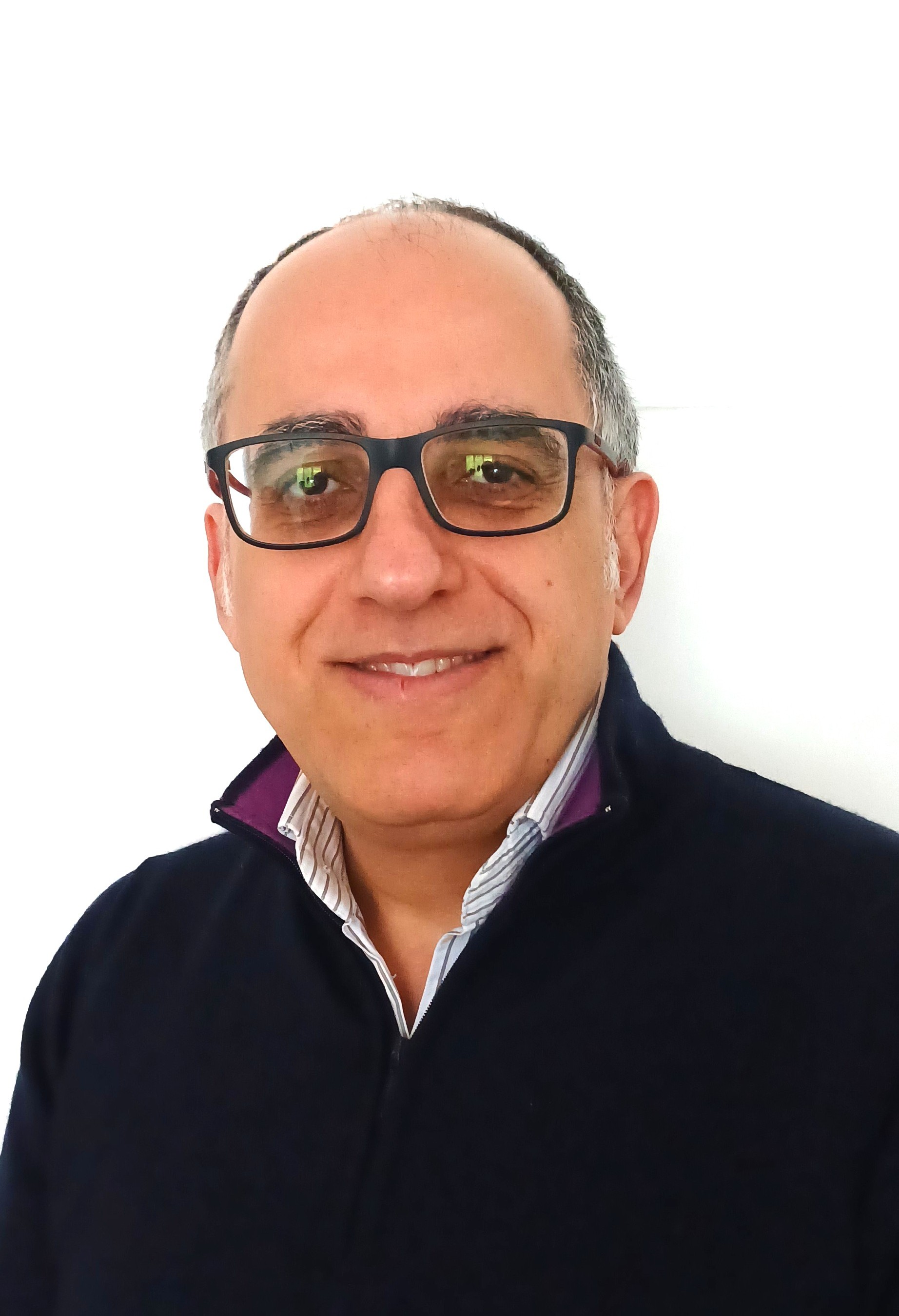
Jalal Al-Tamimi Saturday, Mar 28 · 11:15 AM
Keynote

Jalal Al-Tamimi

Université Paris Cité, France

Talk Title

On the Role of Fine Phonetic Detail in Arabic Phonology

During this talk, I’ll present a series of research activities emphasising the role of fine phonetic detail (FPD) and its contribution to describing gradiency in phonology. FPD relates to speaker-specific details, which are stored in the mental representation and are used to identify specific categories and/or the speaker/dialect, following exemplar-based approaches to speech production and perception. In the Arabic context, we look at examples relating to gemination and how FDP allowed to refine the phonological description of the feature [±Tense]. We then move to the voicing contrast, with and without interaction with gemination showing that the features [±Tense] and [±Voice] are active, but are dialect-specific and receive gradient specification. We then move to pharyngealised and guttural consonants in Arabic, which all share a gradient feature [±CET] (for Constricted Epilaryngeal Tube). Finally, using FDP we demonstrate its usefulness in identifying dialectal differences from a geolinguistic and sociolinguistic points of view.
+ View Speaker Bio
Dr Jalal Al-Tamimi is Associate Professor of Experimental Psycholinguistics and Phonology at Université Paris Cité. After receiving his PhD in 2007 from Lyon University, he worked at Newcastle University, UK between 2007-2021 (researcher and Senior Lecturer), and is Associate Professor at Université Paris Cité since 2021. He is a Lab Phonologist, looking at the links between production, perception, and learning using articulatory, acoustic, behavioural, and computational techniques. He authored over 50 peer reviewed journal articles and in prestigious conferences, and supervised 16 PhD students. He co-developed Arabic WebMAUS for forced-alignment and received in 2023 his HDR documenting the contribution of fine phonetic detail to gradiency in phonology.
📍 Radio-TV Building, Room 251 · Saturday, March 28 · 11:15 AM – 12:15 PM
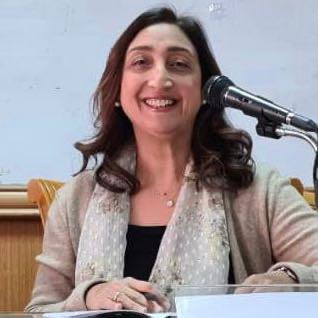
Nihal Nagi Sarhan Saturday, Mar 28 · 5:10 PM
Keynote

Nihal Nagi Sarhan

Ain Shams University, Egypt

Talk Title

Scripts of Power: Decoding Cairo’s Linguistic Landscape

The linguistic landscape -the constellation of written signs in public space- has gradually evolved from being largely approached in descriptive terms into a robust cue of ethnographic typology (Blommaert & Maly, 2019), a strategic site for language planning and policy (Shohamy, 2015) and a dynamic space for pedagogical engagement (Cenoz and Gorter, 2021). This talk shows how the use of Franco (Arabizi) -writing Arabic in Latin letters- on the linguistic landscape creates a crossroads of these trajectories. Drawing on the Cairene linguistic landscape, I trace the migration of Franco/Arabizi from digital interactions between millennials into physical signage, as a parallel code alongside Modern Standard Arabic, dialectal Arabic, and English. Its physical visibility signals a horizontal shift in linguistic capital (Bourdieu, 1991), indexing a social group whose symbolic power is addressed via a newly designed (Bell 2001) hybrid textuality that challenges established classificatory frameworks. Arabizi also unsettles vertical hierarchies of the “levels of modern Arabic” as defined by Badawi (1975) and later scholarship (e.g., 2020), both theoretically and pedagogically. This talk offers critical implications for the broader field. For the theoretical linguist, it invites a re-evaluation of what constitutes a "written variety" and/or a level of contemporary Arabic in the 21st century. For practitioners and educators, it calls for a dialogue on the relevance of "standard" varieties in an increasingly Arabizi-mediated digital and public sphere. Ultimately, it seeks to answer: who owns the linguistic landscape? And equally important, which linguistic capital would gain more value over the near and distant future?
+ View Speaker Bio
Nihal Nagi Sarhan is Professor of Linguistics at the Faculty of Al-Alsun, Ain Shams University. Her work spans sociolinguistics, discourse analysis, and gender studies. Her research examines language as a resource for identity construction, social stratification, and political negotiation. Her recent publications include The Role of Perceived Self–Other Similarity in Mitigating Arabic Hate Speech during Pandemics; From “Operation Cast Lead” to “Operation Swords of Iron”; A Critical Stylistic Analysis of Ideologies of Masculinity and Femininity in Folktales of Egypt (1980), A Tale of a City: The Linguistic Landscape of Cairo Streets; and “Because I Am a Girl”: Identity and Positioning in Afghani Women’s Narratives. She teaches undergraduate and graduate courses in sociolinguistics and discourse studies, serves on the editorial board of the Journal of Arabic Sociolinguistics, and supervises MA and PhD theses.
📍 Radio-TV Building, Room 251 · Saturday, March 28 · 5:10 PM – 6:10 PM
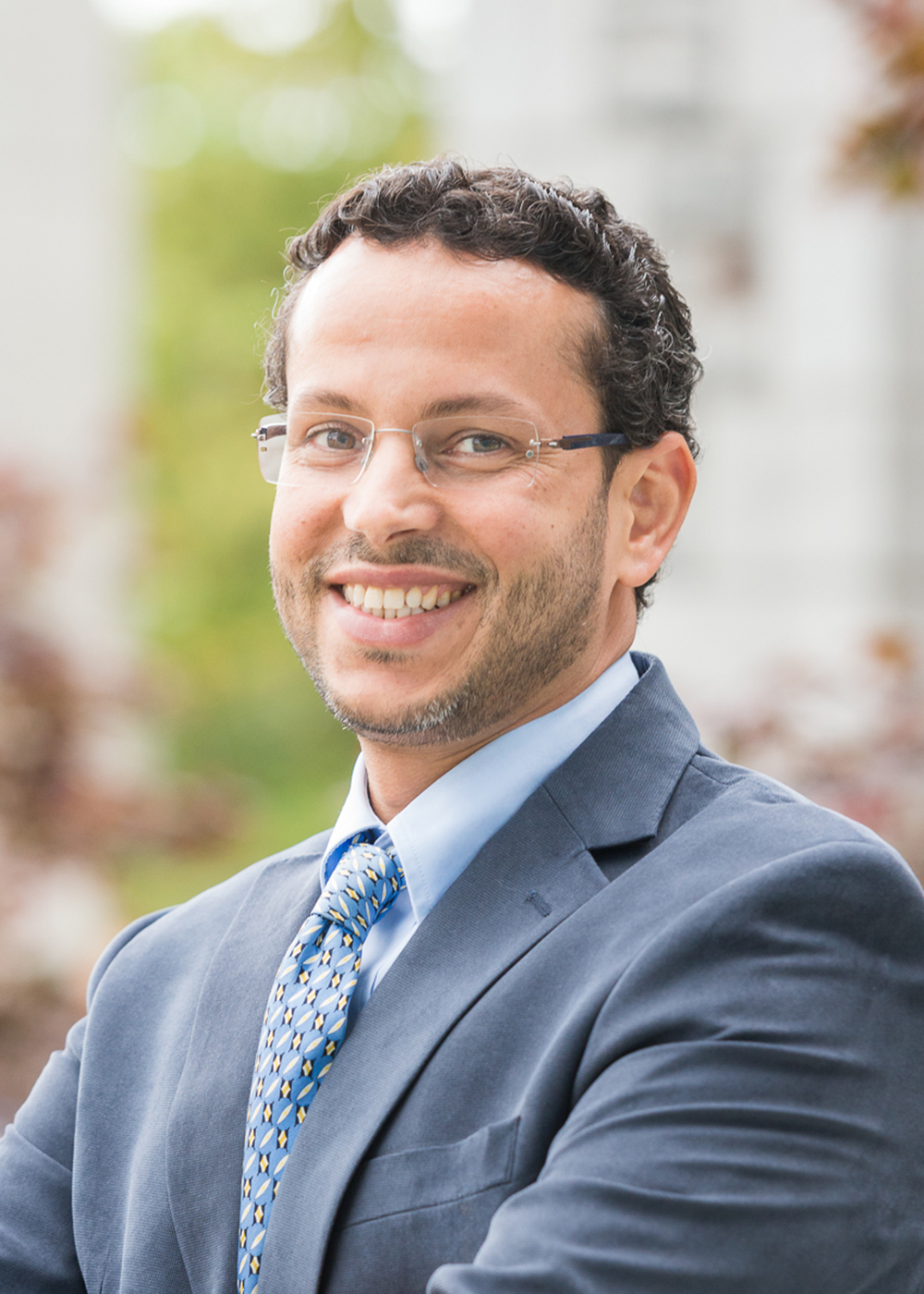
Usama Soltan Friday, Mar 27 · 11:00 AM
Keynote

Usama Soltan

Middlebury College, United States

Talk Title

On the Morphosyntax of Adnominal Demonstratives in Egyptian Arabic

Adnominal demonstratives in Egyptian Arabic (EA) raise a number of interesting puzzles to linguistic analysis. For one thing, like the rest of Arabic dialects, demonstratives in EA co-occur with nominals already marked by the definite article. However, unlike the majority of Arabic dialects (though like those in the Sudanic dialect group), the unmarked placement of EA demonstratives is post-nominal. Interestingly, however, there are a few grammatical contexts in which EA demonstratives may occur pre-nominally (Doss 1976). Even more puzzling is that in those pre-nominal placement contexts, the nominal may appear in either definite or (quite unexpectedly) indefinite form (Woidich 1992). In addition, the pre-nominal placement of demonstratives in EA is typically associated with an attitudinal stance on the part of the speaker, which may be either negative or positive. This talk aims to provide a descriptive account of adnominal demonstratives in EA and propose an analysis for their grammatical properties.
+ View Speaker Bio
Usama Soltan is Professor of Arabic and Linguistics at Middlebury College in Vermont, USA, where he teaches courses on Arabic language and culture, Arabic linguistics and sociolinguistics, and general linguistics. He holds a PhD in linguistics from the University of Maryland, College Park, and his research primarily focuses on the investigation of syntactic and morphosyntactic phenomena in Arabic dialects, specifically in Standard Arabic and Egyptian Arabic. His work on Arabic syntax has investigated issues related to clause structure, word order, agreement and case, negation patterns, negative polarity and negative concord, wh-questions, exceptives, and ellipsis.
📍 Radio-TV Building, Room 251 · Friday, March 27 · 11:00 AM – 12:00 PM